What is basal cell carcinoma or epithelioma?
Basal cell carcinoma is the most common skin cancerWe see it mainly on photoexposed areas of the skin and mainly on the face, neck, back and dorsal surface of the hands. It usually appears after 40 years of age.
What factors favor the appearance of basal cell carcinoma on the skin?
The appearance of basal cell carcinoma or epithelioma is usually the result of a combination of age, genetic, immunological and environmental factors. Thus, older people, with a history of long-term exposure to ultraviolet radiation, with a history of contact with chemical agents or pesticides and with a family history of multiple epitheliomas are candidates for the appearance of epithelioma at some stage of their lives.
Also, people with a history of reckless exposure to the summer sun or tanning booths develop basal cell carcinoma even at a younger age.
How does basal cell carcinoma or epithelioma appear?
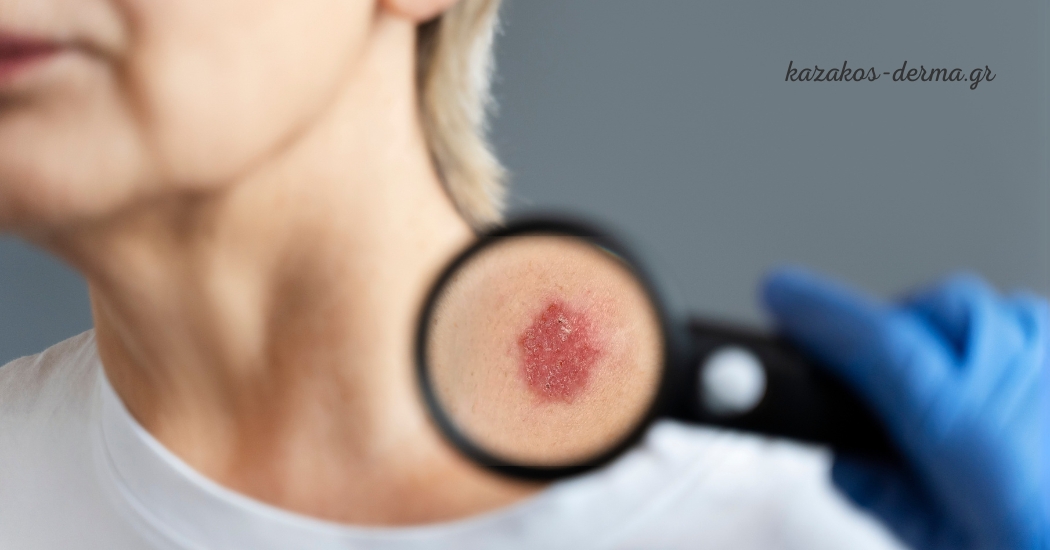
Basal cell carcinoma can appear in various forms. It is usually painless. Its appearance can be confusing. It can look like a dome-shaped lesion like a “pimple” or “olive” that grows slowly or quickly. It can look like a wound that does not close but bleeds constantly and deepens. Or like a scab that falls off and constantly re-forms in the same spot.
How do we diagnose basal cell carcinoma or epithelioma?
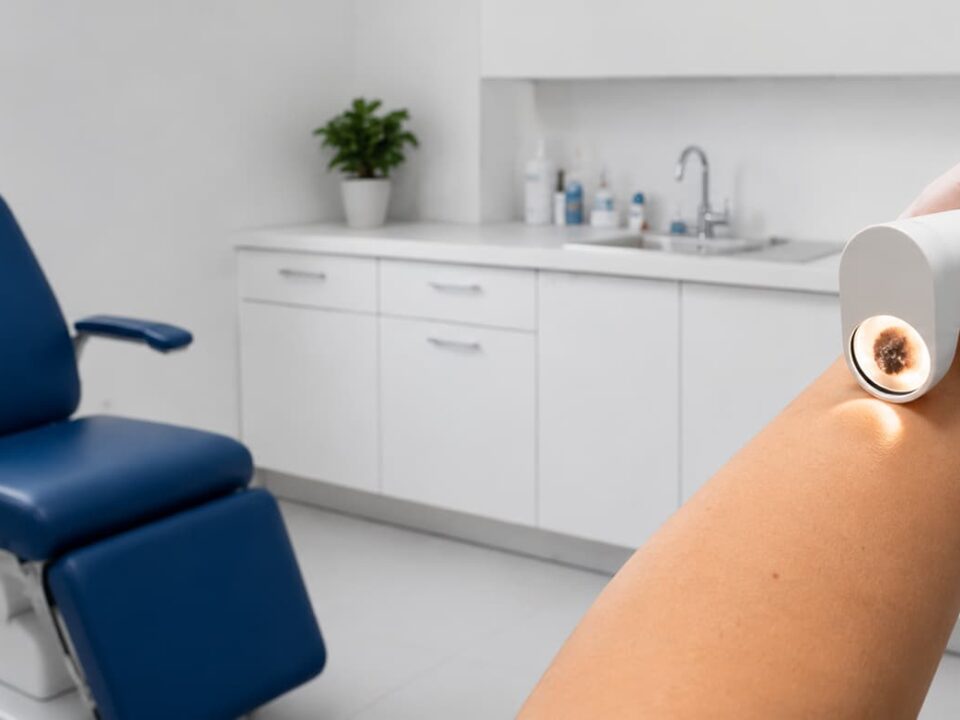
The diagnosis can often be made with a simple clinical examination. In the majority of cases, the dermatologist can identify the suspicious lesion. Other times, the diagnosis can be more difficult and confuse even the most experienced eye. In this case, histological confirmation of a diagnostic is required. biopsy punch.
How do we treat basal cell carcinoma?
The shape, location, and size of the lesion also determine the therapeutic strategy. Thus, in the case of epithelioma, the therapeutic options are as follows:
-
Surgical removal and histological examination. It is the method of choice for removing lesions. It is easily performed under local anesthesia in the office. We simply remove the lesion and suture the healthy borders together. Histological examination confirms that the removal is complete and that the visually healthy skin is free of cancer cells, even at a microscopic level.
-
Dermabrasion and cauterization. In this case, we remove the lesion with a special tool (scraper) and cauterize the base.
-
Cryosurgery. Here we destroy the damage through cooling.
-
Photodynamic therapy. We use it mainly for small and superficial cancerous lesions.
-
Local immunotherapy. The patient applies a topical preparation (imiquimod) to the lesion for several days. It mobilizes the body's defenses in order to destroy the epithelioma. We combine it with other therapeutic methods (e.g. cryotherapy).
-
Surgical removal using Mohs technique. We apply it in cases of lesions with indistinct borders or a history of recurrence after simple surgical excisions. In essence, during the surgery we simultaneously perform a histological check of the surgical margins to ensure that the cancer will not recur. It is a demanding and expensive method.
-
Chemotherapy with vismodegib. We often have cases of multiple epitheliomas or particular technical difficulty for surgical removal. Especially for this case there is the therapeutic option of taking an oral selective inhibitor of the hedgehog pathway. Specifically, taking it can lead to a reduction in size or even disappearance of the lesion. Due to its high cost, it is a therapeutic agent that is used sparingly.
What is the prognosis of basal cell epithelioma?
Basal cell carcinoma is a form of cancer that usually does not metastasize except in severely neglected cases. Usually, treating the lesion also means treating the disease. For this reason, the rates of complete recovery are very high. However, we must regularly re-examine the patient as there is a possibility of local resurgence and the appearance of a new carcinoma in another location. Also, the use of sunscreen with a high protection factor is considered essential
Especially for younger patients, the appearance of an epithelioma is not necessarily life-threatening. However, it is a warning "bell" for lifestyle changes, especially in relation to exposure to the sun and ultraviolet radiation.