Κρυοθεραπεία & Κρυοχειρουργική: Τι είναι και πώς λειτουργεί
Η κρυοθεραπεία είναι μέθοδος ελεγχόμενης ψύξης δερματικών βλαβών σε θερμοκρασίες κάτω των −25°C, με στόχο την εκλεκτική καταστροφή παθολογικού ιστού χωρίς χειρουργική τομή [E1][E2]. Ο επιστημονικά ορθός όρος στη δερματολογία είναι κρυοχειρουργική — το ευρύ κοινό, όμως, τη γνωρίζει ως «κρυοθεραπεία», και στην πράξη χρησιμοποιούμε και τους δύο εξίσου. Αυτό που λίγοι ασθενείς καταλαβαίνουν εξαρχής είναι ότι δεν πρόκειται απλώς για «ψεκασμό με κρύο αέρα» — πρόκειται για κλινικά υπολογισμένη διαδικασία με συγκεκριμένες παραμέτρους, ενδείξεις και αντενδείξεις. Σε αυτό το άρθρο θα βρεις αναλυτικές απαντήσεις στα ερωτήματα που ακούω κάθε μέρα στο ιατρείο μου.
Τι είναι η κρυοθεραπεία και πώς λειτουργεί στο κυτταρικό επίπεδο;
Η κρυοθεραπεία λειτουργεί μέσω τριών αλληλοενισχυόμενων μηχανισμών: σχηματισμός ενδοκυττάριων κρυστάλλων πάγου που διαρρηγνύουν την κυτταρική μεμβράνη, αγγειακή στάση που στερεί το αίμα από τη βλάβη, και ανοσολογική κινητοποίηση που καθαρίζει τα νεκρά κύτταρα [E1][E2]. Για αποτελεσματική κυτταρική καταστροφή απαιτείται τοπική θερμοκρασία μεταξύ −25°C και −60°C — ενώ για κακοήθεις βλάβες στοχεύουμε τουλάχιστον −40°C στην περιφέρεια του όγκου [E12].
Τα κύτταρα του οργανισμού αντέχουν σε θερμοκρασίες έως −20°C. Κάτω από αυτό το όριο αρχίζει η κρυστάλλωση — και από εκεί δεν υπάρχει επιστροφή για το κύτταρο. Αυτή η παρατήρηση, τεκμηριωμένη δεκαετίες πριν, παραμένει η θεμελιώδης αρχή της μεθόδου [E1].
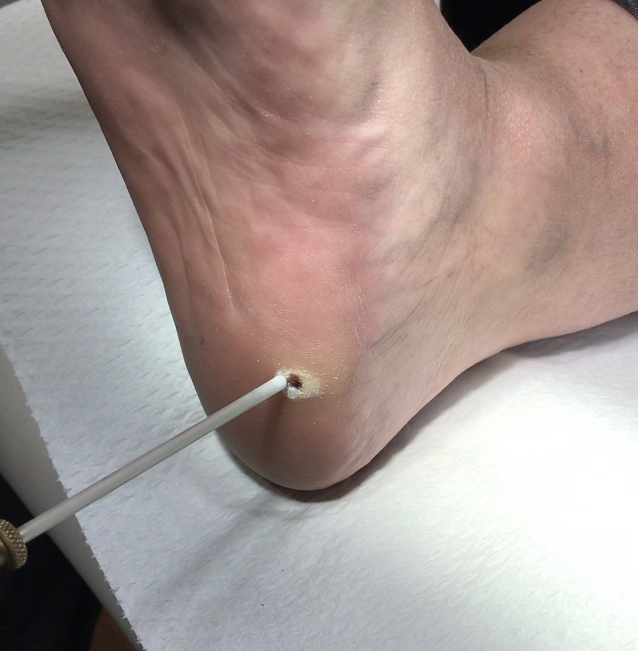
Το κρυογόνο που χρησιμοποιούμε — συνήθως διοξείδιο του αζώτου, σπανιότερα μονοξείδιο του αζώτου — είναι άοσμο και απολύτως ασφαλές στην εισπνοή. Το εφαρμόζουμε με δύο τρόπους: άμεσο ψεκασμό πάνω στη βλάβη, ή με ψύξη ειδικού μεταλλικού probe (κρυώδιο) που έρχεται σε επαφή με την περιοχή. Ο χρόνος εφαρμογής καθορίζει το βάθος της καταστροφής — κι αυτός είναι ο βασικός μοχλός ελέγχου στα χέρια του δερματολόγου.
Για να καταλάβεις τι σημαίνει αυτό πρακτικά: για μια κοινή μυρμηγκιά αρκούν συνήθως 10–15 δευτερόλεπτα ψύξης, ενώ για ακτινικές υπερκερατώσεις (προκαρκινικές αλλοιώσεις του δέρματος από χρόνια ηλιακή βλάβη) χρειαζόμαστε 20–30 δευτερόλεπτα με ένα ή δύο κύκλους πάγωσης–απόψυξης για να εξασφαλίσουμε επαρκή ιστική καταστροφή [E12].
Ποιες παθήσεις αντιμετωπίζονται με κρυοχειρουργική;
Η κρυοχειρουργική καλύπτει ένα ευρύ φάσμα δερματικών βλαβών: από κοινές μυρμηγκιές και genital warts έως ακτινικές υπερκερατώσεις, επιφανειακά βασικοκυτταρικά καρκινώματα και χηλοειδείς ουλές — εφόσον η βλάβη είναι καλά οριοθετημένη και δεν απαιτεί ιστολογική επιβεβαίωση [E1][E2][E11]. Είναι η μέθοδος πρώτης γραμμής για μονήρεις ακτινικές υπερκερατώσεις, σύμφωνα με ανασκοπήσεις του 2022 [E12].
Πιο αναλυτικά, στο ιατρείο μας αντιμετωπίζουμε με κρυοχειρουργική:
- Warts και θηλώματα
- Genetical Warts
- Σμηγματορροϊκές υπερκερατώσεις (καλοήθεις σκουρόχρωμες βλάβες που μοιάζουν σαν κολλημένο κομματάκι κεριού στο δέρμα)
- Ακτινικές υπερκερατώσεις (τραχιές, ηλιόκαυτες βλάβες με προκαρκινικό δυναμικό)
- Αιμαγγειώματα και φλεβικές λίμνες χείλους
- Pyogenic granuloma
- Χηλοειδείς και υπερτροφικές ουλές
- Βλεννώδεις κύστεις και δακτυλιοειδές κοκκίωμα
- Εφηλίδες και καφέ σημάδια
- Νόσος Bowen, ερυθροπλακία Queyrat, δερματικό κέρας
- Επιφανειακό βασικοκυτταρικό επιθηλίωμα και ακανθοκυτταρικό καρκίνωμα υψηλής διαφοροποίησης
- Σάρκωμα Kaposi, δερματική λεϊσμανίαση, Orf
Η επιλογή της κρυοχειρουργικής έναντι άλλων μεθόδων — laser CO2, χειρουργική εκτομή, διαθερμοπηξία — εξαρτάται κυρίως από τον τύπο και τη θέση της βλάβης, την ανάγκη ή μη για ιστολογική εξέταση, και τις προτιμήσεις του ασθενούς. Όταν υπάρχει διαγνωστική αβεβαιότητα, η κρυοχειρουργική δεν είναι η σωστή επιλογή — γιατί καταστρέφει τον ιστό που χρειαζόμαστε για βιοψία [E12][E11].
Πώς γίνεται η κρυοχειρουργική στην πράξη — τι να περιμένεις βήμα βήμα;
Κατά τη διάρκεια της κρυοχειρουργικής, ο δερματολόγος εφαρμόζει το κρυογόνο για συγκεκριμένα δευτερόλεπτα ανάλογα με τη βλάβη, ενώ ο ασθενής νιώθει τσίμπημα και ήπιο καύσο — αίσθηση σαν στιγμιαία εγκαύματος από παγάκι που πατάει απευθείας στο δέρμα. Η όλη διαδικασία διαρκεί λίγα λεπτά [E1][E2].
Πριν τη θεραπεία: αν η βλάβη βρίσκεται σε ευαίσθητη περιοχή ή η εφαρμογή θα είναι εντατική, χρησιμοποιούμε τοπική αναισθησία. Δεν χρειάζεται ιδιαίτερη προετοιμασία από την πλευρά σου.
Κατά τη διάρκεια: ακούς τον ψεκασμό ή νιώθεις την επαφή του probe. Η ψύξη ξεκινά αμέσως. Μπορεί να γίνουν δύο ή τρεις κύκλοι πάγωσης–απόψυξης στην ίδια συνεδρία — ιδίως σε βλάβες που απαιτούν βαθύτερη καταστροφή [E12].
Μετά τη θεραπεία — ώρες 1 έως 24: η περιοχή κοκκινίζει και πρήζεται ελαφρά, λες και έχεις ένα μικρό έγκαυμα εκ ψύχους. Μην βρέξεις την περιοχή το πρώτο 24ωρο. Αν χρειαστείς παυσίπονο, ένα απλό αναλγητικό αρκεί.
Ημέρες 2 έως 7: στις πιο ήπιες εφαρμογές — όπως υπερκερατώσεις — θα δεις μια λεπτή σκουρόχρωμη κρούστα που πέφτει μόνη της. Σε πιο εντατικές εφαρμογές, όπως στις μυρμηγκιές, σχηματίζεται φουσκάλα γεμάτη ορώδες υγρό. Προστάτεψέ τη με αυτοκόλλητο επίδεσμο και άσε την να ακολουθήσει τον φυσικό κύκλο της — μην τη σπάσεις. Εφάρμοσε τοπικό αντιβιοτικό σκεύασμα στην περιοχή.
Ημέρες 7 έως 28: η επούλωση ολοκληρώνεται σταδιακά. Στις περισσότερες βλάβες η περιοχή επιστρέφει στο φυσιολογικό εντός τεσσάρων εβδομάδων [E1][E2]. Μπορείς να επιστρέψεις στη δουλειά την επόμενη μέρα στις ήπιες εφαρμογές — αλλά αν η θεραπεία αφορά περιοχή που φαίνεται ή που τρίβεται (π.χ. πέλμα), φρόντισε να την προστατεύεις.
Ένα πράγμα που βλέπω συχνά: ασθενείς που παίρνουν τηλέφωνο μετά δύο μέρες ανήσυχοι γιατί η περιοχή «μοιάζει με μόλυνση». Σε εντατικές εφαρμογές — όπως στη θεραπεία καρκινικών βλαβών — η αντίδραση μπορεί πραγματικά να μιμείται λοίμωξη: πύον, πρήξιμο, πόνος. Αλλά δεν είναι μόλυνση. Είναι η ανοσολογική απάντηση του οργανισμού που δουλεύει. Κι εδώ ισχύει ο κανόνας που λέω στους ασθενείς μου: «όσο πιο έντονη η αντίδραση στην αρχή, τόσο πιο ουσιαστική η καταστροφή της βλάβης». Αν όμως βλέπεις ερυθρότητα που απλώνεται στο γύρω υγιές δέρμα, πυρετό ή έντονο πόνο που δεν υποχωρεί — τότε επικοινώνησε αμέσως με τον δερματολόγο σου.
Κρυοθεραπεία ή Laser CO2: ποια μέθοδος ταιριάζει σε ποια βλάβη;
Η κρυοχειρουργική και το laser CO2 είναι και οι δύο αποτελεσματικές μέθοδοι για πολλές δερματικές βλάβες, αλλά δεν είναι εναλλάξιμες — η επιλογή εξαρτάται από τον τύπο, τη θέση και τη φύση της βλάβης, τον φωτότυπο του ασθενούς και την ανάγκη ή μη για ακριβή έλεγχο του βάθους καταστροφής [E1][E2][E12].
Η κρυοχειρουργική έχει ένα σημαντικό πλεονέκτημα: είναι γρήγορη, δεν απαιτεί ειδικό εξοπλισμό δωματίου, και μπορεί να εφαρμοστεί σε πολλαπλές βλάβες στην ίδια συνεδρία. Κοστίζει γενικά λιγότερο από το laser, ιδίως όταν πρόκειται για πολλές μικρές βλάβες. Το βασικό της μειονέκτημα: η δυνατότητα ακριβούς ελέγχου βάθους είναι μικρότερη σε σύγκριση με το laser CO2 — πράγμα που σημαίνει υψηλότερη πιθανότητα δυσχρωμίας, ιδίως σε ασθενείς με σκουρόχρωμο δέρμα (φωτότυπος Fitzpatrick III–IV).
Το laser CO2 προσφέρει μεγαλύτερη ακρίβεια βάθους και καλύτερο αισθητικό αποτέλεσμα σε βλάβες του προσώπου ή σε ασθενείς με έντονη τάση για μεταφλεγμονώδη υπερμελάγχρωση (σκούρωμα δέρματος μετά από φλεγμονή). Η αποκατάσταση, όμως, είναι συνήθως μεγαλύτερη και το κόστος υψηλότερο.
Στην πράξη, για πολλαπλές μυρμηγκιές στα πόδια ή ακτινικές υπερκερατώσεις σε μη ορατές περιοχές, η κρυοχειρουργική είναι συχνά η πρώτη επιλογή. Για μεμονωμένες βλάβες στο πρόσωπο ή σε ασθενείς που ανησυχούν πολύ για το αισθητικό αποτέλεσμα, το laser CO2 ενδέχεται να δώσει καλύτερο τελικό αποτέλεσμα. Δεν υπάρχει μία σωστή απάντηση — υπάρχει η σωστή επιλογή για τον συγκεκριμένο ασθενή μπροστά μου.
Ποιες είναι οι επιπλοκές και οι κίνδυνοι της κρυοθεραπείας;
Οι συχνότερες παροδικές επιπλοκές της κρυοθεραπείας είναι πόνος, φουσκάλες και τοπικό πρήξιμο αμέσως μετά τη θεραπεία [E1][E2]. Μακροπρόθεσμα, η πιο συνηθισμένη ανεπιθύμητη ενέργεια είναι η υπομελάγχρωση — ανοίχτεινο σημάδι στη θέση της βλάβης — ή, σπανιότερα, υπερμελάγχρωση [E1][E2]. Σοβαρότερες επιπλοκές όπως αιμορραγία, λοίμωξη, νευρική βλάβη ή ουλοποίηση εμφανίζονται σπάνια [E7][E9].
Στην καθημερινή μου πρακτική, το ζήτημα που επανέρχεται πιο συχνά δεν είναι ο πόνος — οι ασθενείς συνήθως το διαχειρίζονται καλά. Είναι η δυσχρωμία. Και εδώ βλέπω μια σαφή κλινική εικόνα: ασθενείς με σκουρόχρωμο δέρμα — φωτότυπος III ή IV κατά Fitzpatrick — έχουν σημαντικά μεγαλύτερη πιθανότητα να αναπτύξουν μεταφλεγμονώδη υπερμελάγχρωση μετά από κρυοχειρουργική. Αυτό δεν σημαίνει ότι δεν κάνουμε τη θεραπεία — σημαίνει ότι την προγραμματίζουμε προσεκτικά, χρησιμοποιούμε μικρότερες εντάσεις και ενημερώνουμε τον ασθενή εκ των προτέρων για το τι να περιμένει.
Μετά την κρυοχειρουργική, η αντηλιακή προστασία SPF 50+ στην περιοχή δεν είναι απλή σύσταση — είναι προϋπόθεση για να αποφύγεις το σκούρωμα του νέου δέρματος που σχηματίζεται. Χρησιμοποίησέ τη καθημερινά για τουλάχιστον 4–6 εβδομάδες μετά τη θεραπεία, ακόμα και αν ο καιρός είναι συννεφιασμένος.
Τι ΔΕΝ χρειάζεται να ανησυχείς: μια μικρή ατροφία (ελαφρά βύθιση) στην περιοχή μετά την επούλωση εμφανίζεται σε μερικούς ασθενείς, αλλά υποχωρεί προοδευτικά [E1][E2]. Δεν αφήνει μόνιμες ουλές στην πλειονότητα των περιπτώσεων.
Πότε η κρυοχειρουργική αντενδείκνυται — και πότε πρέπει να δεις γιατρό άμεσα;
Η κρυοχειρουργική αντενδείκνυται απόλυτα όταν η βλάβη έχει ασαφή όρια ή απαιτεί ιστολογική διάγνωση, σε ύποπτες για μελάνωμα βλάβες, και σε καρκινώματα υψηλού κινδύνου ή υποτροπιάζοντα σε ευαίσθητες ανατομικές θέσεις [E12][E11]. Σχετικές αντενδείξεις περιλαμβάνουν κρυοσφαιριναιμία, νόσο Raynaud, κρύα κνίδωση, πολλαπλό μυέλωμα, νοσήματα κολλαγόνου, λήψη ανοσοτροποποιητικών αγωγών, αιμοκάθαρση και βαρύ αρρύθμιστο σακχαρώδη διαβήτη [E2][E11][E12].
Θα σταθώ λίγο στις αντενδείξεις που συχνά παραβλέπονται. Η κρυοσφαιριναιμία — μια κατάσταση όπου κάποιες πρωτεΐνες του αίματος κατακρημνίζονται σε χαμηλές θερμοκρασίες, επηρεάζοντας μικρά αγγεία — αποτελεί απόλυτη αντένδειξη. Ομοίως η νόσος Raynaud, κατά την οποία τα αγγεία των άκρων αντιδρούν υπερβολικά στο ψύχος. Αν ανήκεις σε κάποια από αυτές τις κατηγορίες, ενημέρωσε τον δερματολόγο σου πριν από οποιαδήποτε θεραπεία — ακόμα κι αν σε έχουν παρακινήσει να κάνεις κρυοχειρουργική αλλού.
Μια βλάβη στο δέρμα που δεν ξέρεις τι ακριβώς είναι; Δεν χρειάζεσαι κατ’ ανάγκην γιατρό για μια μικρή, σταθερή, ανώδυνη βλάβη που υπάρχει εδώ και χρόνια. Αλλά αν η βλάβη αλλάζει μέγεθος, χρώμα ή σχήμα, αν αιμορραγεί, αν εμφανιστεί ξαφνικά σε ασθενή άνω των 50 ετών, αν δεν επουλώνεται μετά από τραύμα — τότε έλα. Χρειάζεσαι πρώτα διάγνωση, και μετά θεραπεία.
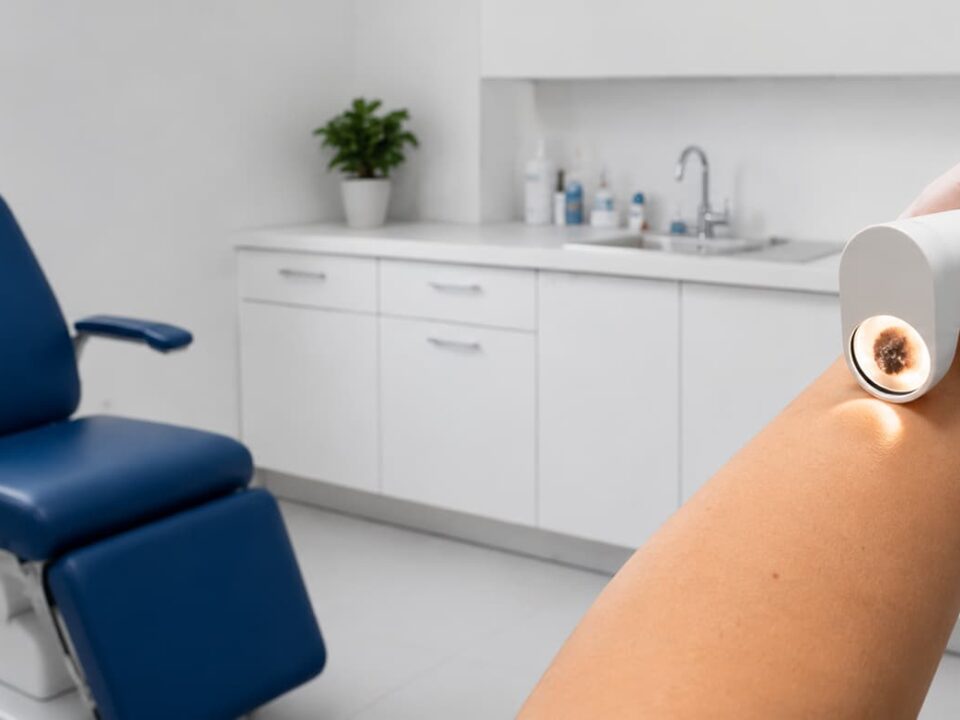
Στα χρόνια της κλινικής μου εμπειρίας, έχω δει αρκετές φορές ασθενείς που ήρθαν στο ιατρείο μας αφού είχαν κάνει κρυοχειρουργική σε βλάβη αλλού, χωρίς προηγούμενη δερματοσκόπηση — τον έλεγχο με ειδικό φακό μεγέθυνσης που επιτρέπει να βλέπω δομές αόρατες στο γυμνό μάτι. Σε δύο από αυτές τις περιπτώσεις η βλάβη είχε χαρακτηριστικά που θα είχαν οδηγήσει σε βιοψία αντί για κρυοχειρουργική. Η ακολουθία είναι πάντα: πρώτα δερματοσκόπηση, μετά απόφαση για θεραπεία.
Συχνές Ερωτήσεις
Πονάει η κρυοθεραπεία και χρειάζεται αναισθησία;
Κατά τη διάρκεια της κρυοχειρουργικής νιώθεις τσίμπημα και ελαφρύ καύσο που διαρκεί όσο η εφαρμογή — μερικά δευτερόλεπτα έως λίγα λεπτά. Στις περισσότερες περιπτώσεις δεν απαιτείται αναισθησία. Σε εντατικές εφαρμογές ή ευαίσθητες περιοχές χρησιμοποιούμε τοπικό αναισθητικό πριν ξεκινήσουμε [E1][E2].
Πόσες συνεδρίες κρυοθεραπείας χρειάζονται συνήθως;
Εξαρτάται από τον τύπο και το μέγεθος της βλάβης. Μια μεμονωμένη σμηγματορροϊκή υπερκεράτωση συνήθως αντιμετωπίζεται σε μία συνεδρία. Οι μυρμηγκιές και τα κονδυλώματα συχνά χρειάζονται δύο έως τρεις συνεδρίες με διάστημα 3–4 εβδομάδων μεταξύ τους, ανάλογα με την ανταπόκριση [E1][E11].
Μπορεί να αφήσει ουλή ή σημάδι η κρυοχειρουργική;
Στη συντριπτική πλειονότητα των περιπτώσεων δεν αφήνει μόνιμη ουλή. Η πιο συχνή μακροπρόθεσμη ανεπιθύμητη ενέργεια είναι ήπια υπομελάγχρωση — ένα ανοιχτόχρωμο σημάδι στη θέση της βλάβης — που υποχωρεί προοδευτικά σε μήνες. Η χρήση αντηλιακού SPF 50+ μετά τη θεραπεία μειώνει σημαντικά τον κίνδυνο δυσχρωμίας [E1][E2].
Μπορώ να κάνω κρυοθεραπεία αν παίρνω αντιπηκτικά ή ανοσοκατασταλτικά φάρμακα;
Τα ανοσοτροποποιητικά φάρμακα αποτελούν σχετική αντένδειξη για κρυοχειρουργική, γιατί αλλοιώνουν την ανοσολογική απόκριση που αποτελεί μέρος του θεραπευτικού μηχανισμού. Τα αντιπηκτικά δεν αποτελούν αντένδειξη per se, αλλά πρέπει να τα αναφέρεις στον δερματολόγο σου πριν από κάθε επεμβατική διαδικασία [E2][E11].
Καλύπτεται η κρυοθεραπεία από ασφαλιστικά ταμεία;
Η κρυοχειρουργική για ιατρικά τεκμηριωμένες βλάβες — όπως ακτινικές υπερκερατώσεις, κονδυλώματα ή επιφανειακά καρκινώματα — καλύπτεται σε πολλές περιπτώσεις από τον ΕΟΠΥΥ και ιδιωτικές ασφάλειες, με βάση τη διάγνωση και τον κωδικό πράξης. Για αισθητικές ενδείξεις, όπως εφηλίδες ή καλοήθεις σημάδια, η κάλυψη εξαρτάται από το ατομικό σου συμβόλαιο.
Αν αναγνωρίζεις κάποια από τις βλάβες που αναφέρονται εδώ ή έχεις αμφιβολίες για μια βλάβη στο δέρμα σου, η καλύτερη επόμενη κίνηση είναι μια εξέταση — επικοινωνήστε μαζί μας για να βρούμε μαζί τη σωστή προσέγγιση.
Παραπομπές
- [E1] Kuflik EG. Cryosurgery for skin cancer: 30-year experience and cure rates. Dermatol Surg, 2004. https://pubmed.ncbi.nlm.nih.gov/9854156/
- [E2] Zouboulis CC. Cryosurgery in dermatology. Eur J Dermatol, 2015. https://pubmed.ncbi.nlm.nih.gov/26497955/
- [E7] Cronin E. Cryotherapy for common skin conditions. Am Fam Physician, 2020. https://pubmed.ncbi.nlm.nih.gov/32227823/
- [E9] Holt PJ. Cryotherapy for skin cancer: results over a 5-year period using liquid nitrogen spray cryosurgery. Br J Dermatol, 1988. https://pmc.ncbi.nlm.nih.gov/articles/PMC4436237/
- [E11] Thai KE et al. Surgical excision versus cryotherapy in the treatment of Bowen’s disease. Australas J Dermatol, 2004. https://pubmed.ncbi.nlm.nih.gov/23316984/
- [E12] Vegting Y et al. Cryosurgery for actinic keratoses: a systematic review. J Eur Acad Dermatol Venereol, 2022. https://pmc.ncbi.nlm.nih.gov/articles/PMC8906699/
Εξωτερικές Πηγές:
- American Academy of Dermatology (AAD) — Clinical guidelines on cryosurgery and treatment of actinic keratoses. https://www.aad.org
- PubMed / NCBI — Zouboulis CC, «Cryosurgery in dermatology», European Journal of Dermatology, 2015. https://pubmed.ncbi.nlm.nih.gov/26497955/
- PMC / NCBI — Vegting Y et al., «Cryosurgery for actinic keratoses: a systematic review», JEADV, 2022. https://pmc.ncbi.nlm.nih.gov/articles/PMC8906699/