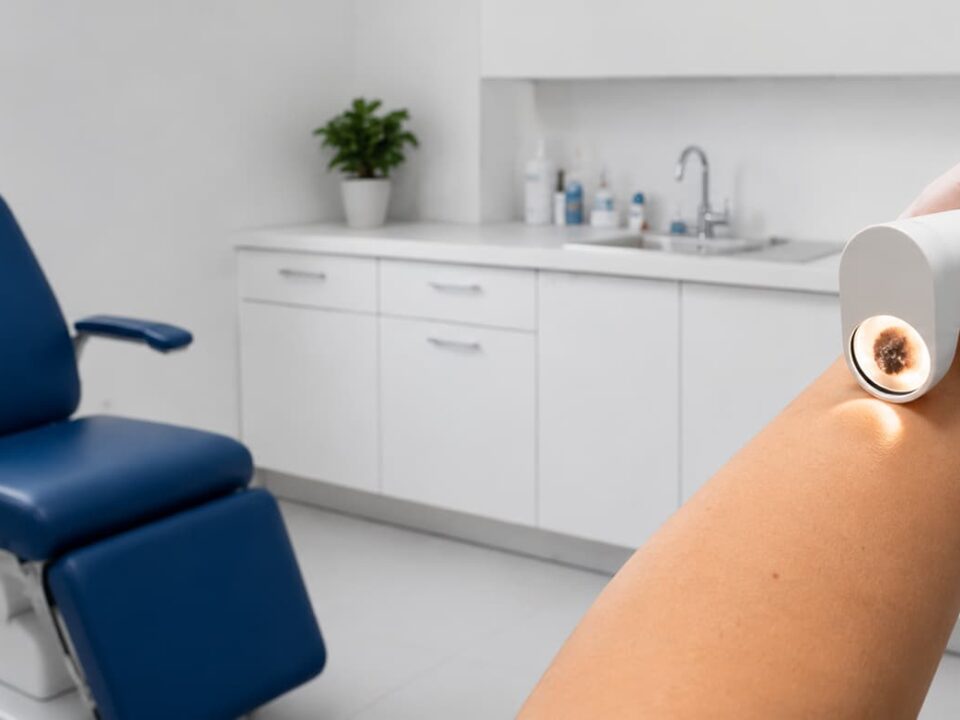
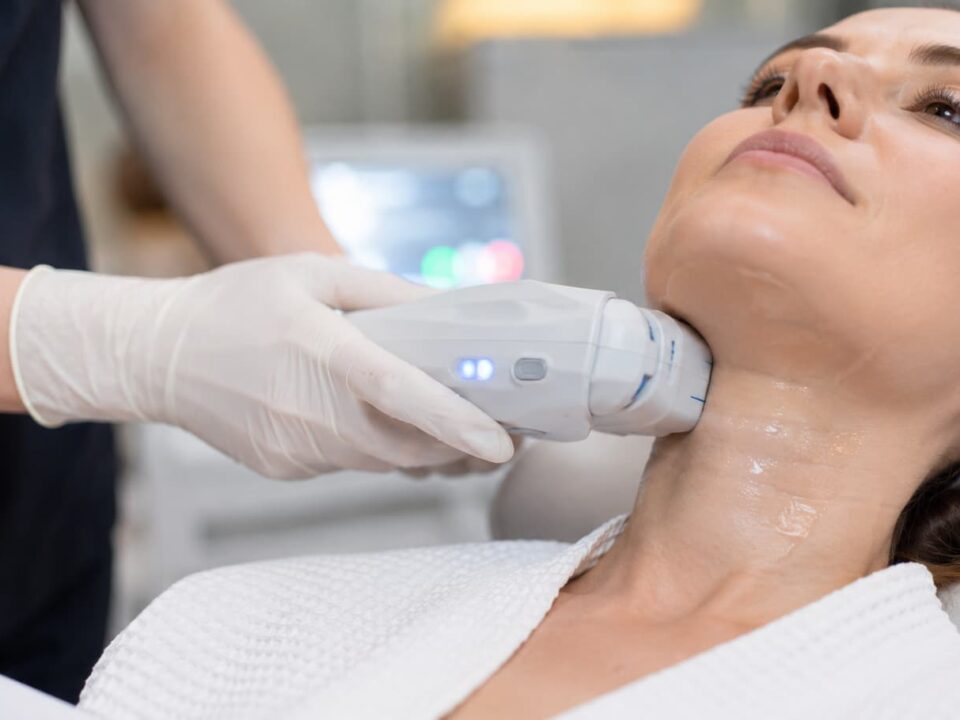
Wart treatment is a popular practice in dermatology clinics. Warts (or more correctly, warts) are a benign skin infection. Their characteristic is the appearance of one or more epidermal lesions. They affect children and adults. They are contagious and are transmitted through contact with infected skin or contaminated surfaces. They can appear anywhere on the body. The most common sites of appearance are the soles of the feet, palms, fingers, dorsal surfaces of the hands and feet, elbows, knees, and face.
What to look out for when treating ants
Treating ants is always our goal. Factors we consider when choosing a treatment strategy are the following:
- Patient's age
- Patient cooperation and compliance capabilities
- Resistance and duration of infection
- Location of faults
- Lifestyle-activities
- Other concomitant diseases
- Sun exposure after treatment
We always keep in mind that warts are usually very persistent and often relapse.
The goal of treatment is to reduce the viral load to such an extent that the virus is either eliminated or entrenched by the body's defenses and enters a "latent" state.
Ant treatment with topical preparations
Topical caustic preparations are strictly applied to the hardness of the wart. They are solutions or gels with keratolytic action. They require a series of applications. We prefer them in very young children or when an invasive approach is not desired. They are usually painless but sometimes create bad chemical burns in case of misuse. It is best to avoid them in facial warts.
Ant treatment with electrocautery
Electrocautery or diathermy is an invasive method. It causes tissue destruction of the lesion. Local anesthesia before application is mandatory. We burn the lesion with the help of high-frequency radio frequencies (and not with electric current as many believe). The lesion is sublimated and a defect is created in its place that heals within the following days. We apply wound-type care in the following days.
It is an ideal method for warts that are not located in pressure areas. It requires a smaller number of sessions and usually one session is enough. The disadvantage is the long recovery time, the abstinence from activities and the risk of scarring.
Treatment of ants with cauterization with laser διοξειδιου του ανθρακα
CO2 laser cauterization has many similarities to electrocautery. Here too, we apply local anesthesia before the procedure. The laser beam causes sublimation of the target and leaves a tissue defect. The CO2 laser burns with greater precision but is less effective on very dry lesions. It is also good for lesions in areas where there is no pressure. We apply similar recovery and care as electrocautery.
Ant treatment with cryotherapy
The cryotherapy is a popular invasive method of treating warts. It is cauterization with cooling at a very low temperature. We usually do not apply local anesthesia. The comparative advantage of the method is that in addition to tissue destruction, it "hits" the virus from two other paths: the blockage of the vessels that "feed" the wart and the immune stimulation against the virus. This combined mode of action is also responsible for the (desired) intense skin reaction to the treatment. Immediately after the treatment, the skin appears gray and hurts. After 1-2 24 hours, a blister full of fluid appears. The intensity of the reaction determines the recovery. We provide instructions for treatment with local antibiotic treatment.
In cases of severe reactions, we also administer oral antibiotics for a few days. Cryotherapy is clearly preferable to electrocautery for plantar warts and very "hard" lesions. Usually more than one session is required. The recommendation is to abstain from activities for a few days after application. See here How is ant cryotherapy done?
Ant treatment with surgical removal
Surgical removal of warts is a special case of treatment. We use it only for warts in very specific locations that make other therapeutic manipulation difficult. It has all the disadvantages of surgical removal, namely postoperative pain, risk of scar healing, special care until the stitches are cut and afterwards. However, the biggest problem is the risk of contaminating the incision itself with the virus. That is, the virus could spread microscopically during the removal process and infect the surgical margins. So then not only will we not have treatment for the pre-existing wart, but also the appearance of a new one with a larger size as it will occupy the entire length of the incision!
Ant treatment with pulse–dye laser
Το Pulse-dye laser είναι laser θεραπείας αγγειακών βλαβών. Στοχεύει στο να φράξει τα μικροσκοπικά αγγεία που «ταΐζουν» τη μυρμηγκιά χωρίς να βλάψει τους γειτονικούς ιστούς που περιβάλλουν τη βλάβη. Δεν προκαλεί ιστική καταστροφή αλλά αυτόματο «μάζεμα» της μυρμηκιάς εντός λίγων ημερών. Δηλαδή η μυρμηκιά ‘’μαζεύει’’ από μόνη της μέσα σε λίγες ημέρες. Φεύγει χωρίς πληγές και φουσκάλες που βλέπει κανείς συνήθως μετά από καυτηριασμούς ή κρυοθεραπείες. Τοπική περιποίηση και αντιβιοτική αγωγή δεν είναι απαραίτητη. Προτιμάμε σε περιπτώσεις που επιθυμούμε άμεση επιστροφή στις καθημερινές δραστηριότητες (εργασία, αθλητισμός) χωρίς αποθεραπεία ή σε περίπτωση ύπαρξης προβλημάτων υγείας που μας αποτρέπουν από άλλες επεμβατικές μεθόδους (π.χ. σακχαρώδης διαβήτης). Δείτε here How to treat multiple warts with laser.