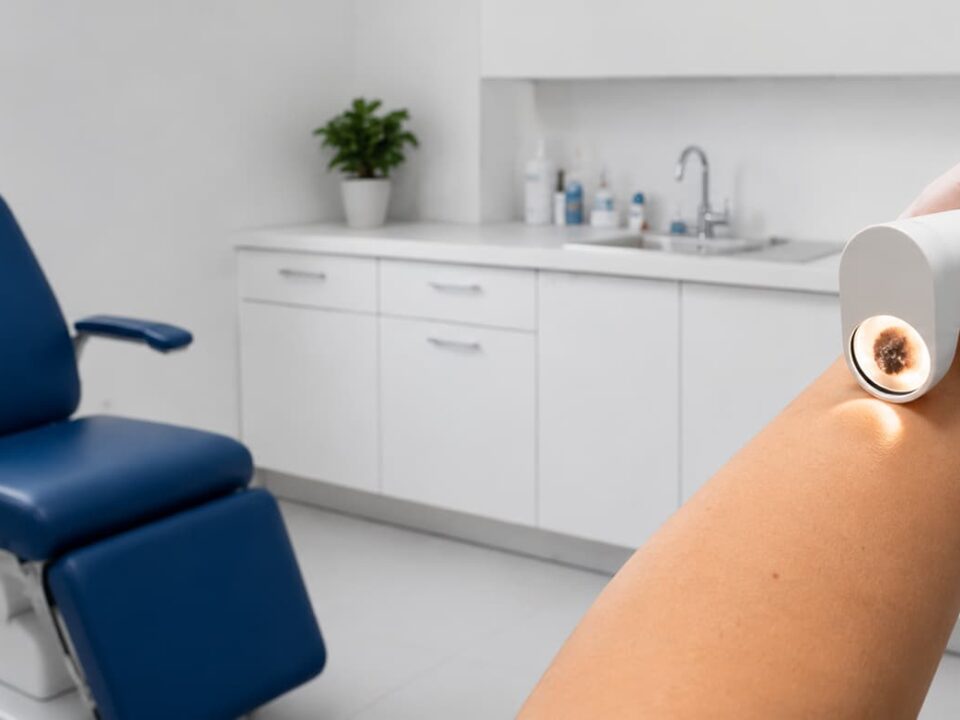
What are skin papillomas?
Cutaneous papillomas or warts are common benign small skin growths. We see them on the surface of the skin. Their widespread name is "moles". They are dome-shaped or polypoid. They have a stalk that holds the main lesion to the surface of the skin. They are superficial lesions. They are usually skin-colored or darker. They are rarer in childhood and appear progressively in older ages. We find them in both men and women. Cutaneous papillomas are members of the large family of hpv lesions, but without the transmissibility of other subtypes (such as warts or genital warts)
Where do skin papillomas appear?
We see them mainly in places where skin rubs against skin, such as skin folds or skin against objects (collars, chains, etc.). The main places of appearance are the neck, armpits, groin folds, areas under the breasts. However, they can also extend to free surfaces of the body.
Are skin papillomas dangerous?
No. They are benign skin lesions. They have zero chance of turning into something bad. However, they create aesthetic and practical problems due to friction and injuries.
What other factors favor the appearance of papillomas?
The appearance of papillomas is favored by a number of conditions such as:
exposure to sunlight,
the large body weight,
the increase in triglycerides and cholesterol,
insulin resistance disorders and diabetes mellitus,
pregnancy,
menopause,
friction with clothing, jewelry, and collars
What is the relationship between skin papillomas and warts?
Papillomas sometimes look like warts however, they are essentially different. Warts are a contagious virus. They are caused by a series of subtypes of the Human Papilloma Virus (HPV) family. Papillomas are not contagious. However, we have found HPV subtypes 6 and 11 in a very high percentage of warts. It is therefore possible that HPV viruses may be involved in the mechanism of warts formation.
How do we treat skin papillomas?
Their treatment is the removal of the lesions by cauterization (diathermocoagulation, laser CO2) or shaving surgical removal (cutting off) of their stalk. We remove them by applying local anesthesia in injectable form or cream form. We usually do not perform histological examination of the lesions. The aesthetic result is excellent.
It must be said that the predisposition to develop papillomas does not change with the removal of the lesions. Therefore, in the future they will probably reappear. But they will not be the same as the ones we cauterized. And the new lesions require the same treatment.
Book your appointment with us immediately for any questions you may have!