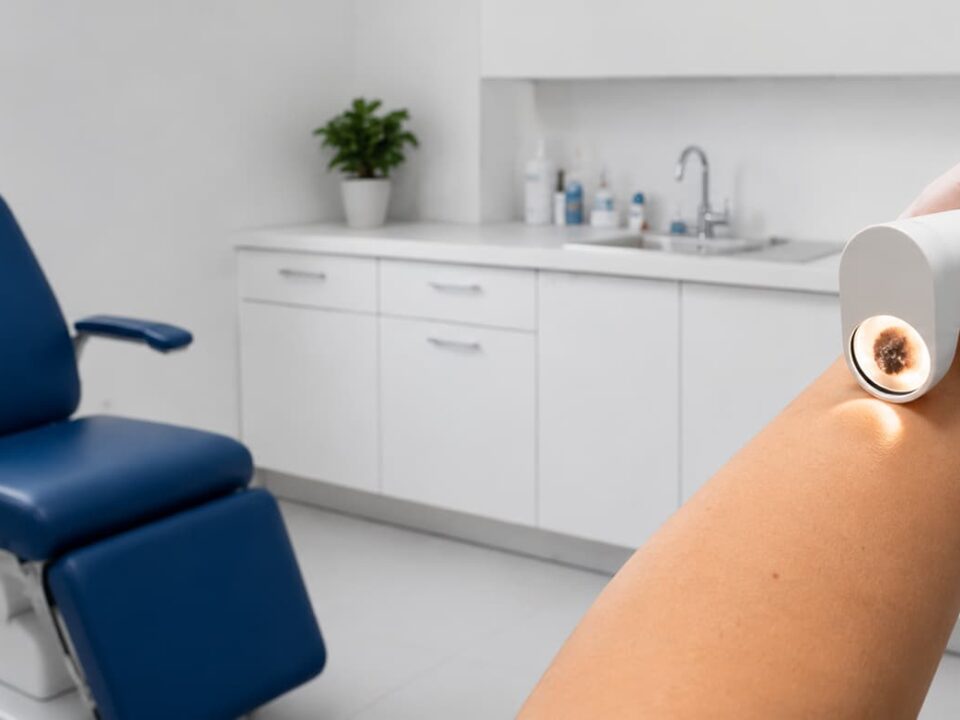
What are brown spots?
The brown spots or spots are the brown marks that we see progressively on photoexposed parts of the body. Brown spots are the most well-known and easily recognizable signs of skin aging or “dermatoporosis”. These do not only concern the elderly but also younger people with a history of sun exposure or family predisposition. Brown spots are flat marks with borders and color in various shades of brown. They are benign hyperplasias of skin cells and are completely superficial. The areas where we mainly find them are the face, the dorsal surface of the hands, the extremities and the back. Brown spots tend to appear and multiply over time.
Brown spots and scabies. Are they the same?
The term "melanocytic" is used by the general public to mean a wide range of discolorations of the face and body. Thus, we encounter the term "melanocytic" in the case of brown marks/freckles. We also encounter it in the case of melasma. Melasma is often confused with freckles, but it is a completely different thing. Melasma is created by the overproduction of melanin by the melanocytes of photoexposed areas. Therefore, it has nothing to do with the hyperplasia of epidermal cells.
This difference is important in treatment. As we will see below, brown spots are successfully treated with the help of conservative and invasive methods. On the contrary, melasma has another coping strategy.
How do we remove brown spots?
The dermatologist's goal is to rid his patient of the unsightly brown marks that often give the impression of age, often unjustly. This can be done with conservative means or invasive methods.
Conservative treatments include treatments with the application of creams containing bleaching or exfoliating agents (fruit acids, retinol). They are effective on light spots and only after a long period of application. We also use them as a maintenance treatment after invasive methods.
There are invasive methods such as cauterization with cryotherapy Cryotherapy is widely used and effective for moles. Its goal is to destroy and detach part or all of the mole after one or more applications. However, it carries the risk of scarring and permanent discoloration.
The application is also tested and effective chemical peels on brown spots. We want a series of sessions with intervals of 3-4 weeks. Each session achieves the removal of a part of the plaque through controlled exfoliation. The application of peeling helps mainly in photoaged areas with a lot of brown spots. As a method it has seasonal limitations.
At our office, the treatment of choice is laser removal of brown spots.
In our office, the treatment of choice is laser removal of brown spots. How does laser remove freckles?
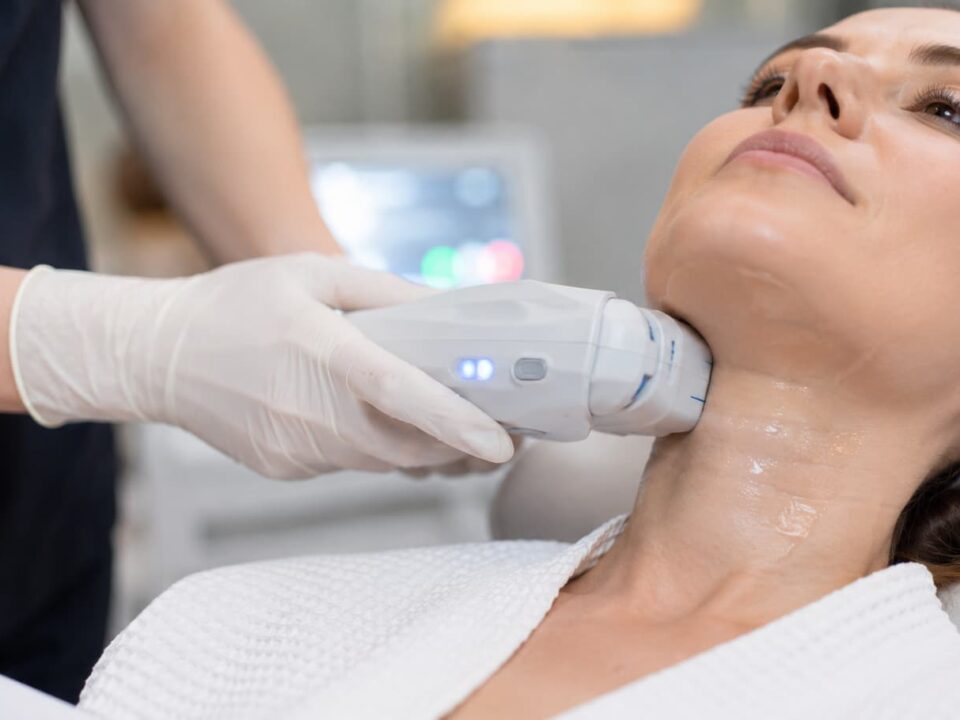
The specialized Q-switched Alexandrite laser ensures that we achieve complete removal of moles without damaging the underlying skin, ensuring an excellent aesthetic result. The application is quick and with immediate results. The patient lies down and wears special protective glasses. Local anesthetic cream is usually not necessary. If necessary, we apply anesthetic cream a few hours before the treatment.
During the session, the patient feels small pricks. The unwanted mark absorbs the applied laser energy and a small crust appears in its place. The spot should not get wet for twenty-four hours and may be accompanied by very mild itching. Locally, the patient usually applies soothing compresses initially and a healing cream afterwards. The crust is left to fall off on its own after a few days, revealing new healthy skin without marks or discoloration! The only care needed is to protect the new skin with sunscreen. See here how to remove brown marks with laser.
Regardless of the removal method, it is essential to avoid sun exposure for a few weeks after treatment.